
5 Essential Questions to Ask Before Choosing Your Next Neighborhood

A great house can feel wrong if the neighborhood does not fit. Before making an offer, look past the curb appeal. The streets, schools, noise, commute, and daily routines matter just as much as the floor plan.
Use these five questions to judge a neighborhood with clear eyes.
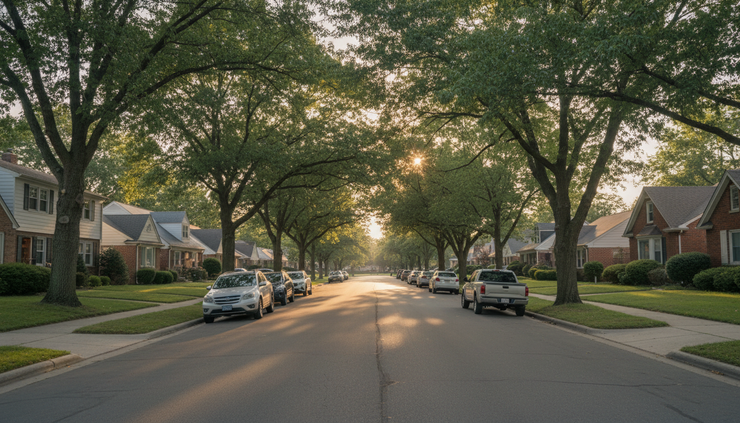
1. Do I feel safe here at different times of day?
Safety is often the first concern, and it should be handled with care. Do not rely on one drive-through or a quick online opinion. A neighborhood can feel different on a weekday morning, a Friday night, and a Sunday afternoon.
Look for practical signs:
Street lighting
Sidewalk condition
Traffic speed
Visibility at intersections
Home maintenance
Activity in parks and public spaces
Check local police reports or public crime maps when available. Look for patterns, not one-off incidents. Also review city or county websites for information on traffic safety, code enforcement, and public works projects.
Then visit in person. Park nearby and walk a few blocks. Listen for noise. Watch how drivers treat pedestrians. Notice whether people use the sidewalks, parks, and front porches.
Tip: Ask specific questions. Instead of “Is this area safe?” ask, “How well lit are the streets at night?” or “Are there busy roads near the home?” Specific questions lead to better answers.
2. Does the location match my daily routine?
A neighborhood should make normal life easier. Start with the places visited most often. That may include work, school, grocery stores, medical offices, parks, gyms, family, or places of worship.
Do a real commute test if possible. Do not rely only on a map app at noon. Test the drive during normal rush hour. If public transit matters, check walking distance to stops, service frequency, and weekend schedules.
Think about errands too. A home that is 20 minutes from work may still create stress if every school pickup, grocery run, and appointment takes extra planning.
Ask:
How long will daily trips take during peak hours?
Are there several routes in and out?
Can I walk or bike safely to nearby places?
Is parking easy for residents and guests?
Will this location still work if my schedule changes?
This is where lifestyle needs become clear. A quiet rural road may be perfect for space and privacy. A more central neighborhood may work better for shorter drives and quick errands. Neither is better. The right choice depends on how the days will actually run.

3. Are the schools and learning options a good fit?
For households with children, schools can carry major weight. For buyers without children, school quality may still affect future resale interest. That said, school choice is personal. Test scores alone do not tell the full story.
Start by confirming the assigned school boundaries with the district. Boundaries can change, and listing information can be outdated. Then review school websites for programs, calendars, class offerings, transportation details, and extracurriculars.
Look beyond rankings. Consider:
Commute time to school
Bus availability
Before-school and after-school care
Special programs or support services
Class size information when available
Communication style from the school or district
If possible, attend a public school board meeting or community event. Read district updates. Talk with parents who have direct experience, but remember that each family has different needs.
Tip: If schools are a top priority, verify details directly with the school district before making a final decision.
4. Are the amenities useful or just nice on paper?
Amenities sound appealing in a listing, but they need to match real habits. A neighborhood with trails, restaurants, playgrounds, and shops may be a strong fit if those features will be used. If not, they may not add much to daily life.
Make two lists before comparing areas.
Must-have amenities
Needed for daily comfort, routines, or health.
Nice-to-have amenities
Enjoyable but not essential to the decision.
Must-haves might include a nearby pharmacy, a dog-friendly park, public transit, a grocery store, or a short drive to medical care. Nice-to-haves might include coffee shops, a farmers market, tennis courts, or restaurants.
Also check how easy the amenities are to reach. “Close to parks” means less if crossing a major road makes walking difficult. “Near shopping” may be less useful if traffic is heavy every weekend.
Gather information by using map tools, reading municipal park pages, walking the area, and timing trips from the actual home address. Pay attention to sidewalks, bike lanes, crosswalks, hills, and parking.

5. Does the community vibe fit my future plans?
Community vibe is harder to measure, but it matters. Some neighborhoods feel social and active. Others feel quiet and private. Some have block parties, youth sports, and busy parks. Others offer space, calm, and fewer interruptions.
Spend time where residents spend time. Visit parks, libraries, local shops, sidewalks, and community centers. Look for bulletin boards, event calendars, neighborhood associations, and city meeting notes.
Ask yourself:
Do people seem to use shared spaces?
Is the area quiet or active at the times I care about?
Are homes mostly owner-occupied, rented, or mixed?
Are there signs of new development or major road projects?
Will this neighborhood fit my life three to five years from now?
Future plans matter. A first home, growing household, remote work setup, retirement plan, or desire for less maintenance can all change what “good fit” means.
This is one of the most useful parts of choosing your next neighborhood. A home should work for the current season of life and leave room for what may come next.

How to gather better neighborhood information
Good research uses more than one source. Combine online tools with in-person visits.
Use this simple approach:
Start online
Review maps, school district pages, city websites, transit schedules, and public safety resources.
Visit more than once
Go during rush hour, after dark, and on a weekend.
Walk the area
Driving hides details. Walking reveals noise, traffic, smells, hills, sidewalks, and general upkeep.
Talk to people carefully
Ask factual questions about traffic, noise, parking, local events, and services. Avoid questions that ask others to judge who lives there.
Check future changes
Look for planned roadwork, zoning updates, new developments, or school boundary discussions.
Trust patterns
One comment or one visit should not decide everything. Look for repeated signs across several sources.
If a neighborhood is under serious consideration, get local guidance before making an offer. For help weighing homes and neighborhoods with a clear plan, contact Sandi Yaventurato.
The best neighborhood choice is practical, not perfect. Focus on safety, routine, schools, amenities, and community fit. Then compare each area against the life that will be lived there, not just the house that looks best online.


Comments